
Net Zero by 2030
Boldly Pursuing a Greener and More Resilient Future
YVR is carbon neutral
YVR has been a carbon neutral airport since 2020. We achieve carbon neutrality annually by measuring our emissions from operations and corporate travel, reducing emissions where we can, and then by purchasing high quality BC-based carbon offsets from projects such as the Great Bear Forest Carbon Project.
The records of our most recent carbon offset purchases are available here:
YVR is one of only three airports in North America and the only airport in Canada to achieve Level 4+ Accreditation from the Airports Council International Airport Carbon Accreditation Programme, recognizing our leadership in reducing carbon emissions.
Net zero 2030
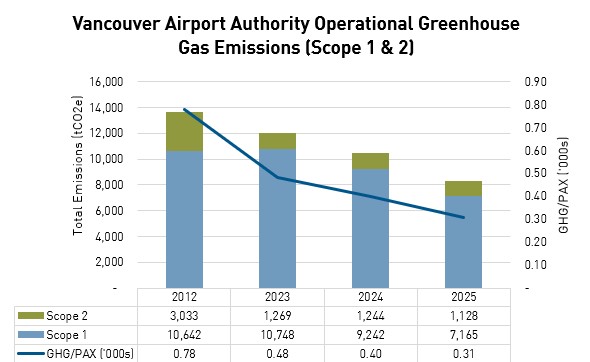
Looking ahead, we’ve made the bold commitment to become net zero carbon by 2030. This commitment reflects our plan to reduce airport operations emissions by 90% below 2012 levels and then take responsibility for the remaining emissions by investing in carbon removal projects. YVR is also a founding participant in the Government of Canada’s Net Zero Challenge, joining companies and industry leaders across Canada that are developing and implementing credible and effective plans to transition their facilities and operations to net zero emission before 2050.
We have developed a Roadmap to Net Zero Carbon that will guide us through to 2030 to ensure we achieve our Net Zero target. The plan outlines four decarbonization pathways:
 |
Energy conservation and electrification in our buildingsMeeting operational requirements more efficiently and using less energy for heating/cooling, cooking, lighting and other electrical loads. Switching from natural gas to renewable electricity where possible. |
 |
Greening our fleetsInvesting in electric and hydrogen vehicles while also right sizing them to match operational requirements and switching to renewable fuels for heavier equipment. |
 |
Replacing fossil fuels with renewable alternativesInvesting in 100 per cent green electricity and on-site solar, securing renewable natural gas for heating/cooking, and purchasing renewable diesel for generators. |
 |
Closing the gapInvesting in high quality carbon removals for the emissions that remain. This could include investments in technology like direct air capture or bio-sequestration projects. |
2025 progress update
Carbon reductions
While passenger growth is anticipated to continue, it is expected that emissions will decrease every year as further investments are made in carbon reduction projects and renewable fuels.
Project highlights
 |
LightingWe completed two major lighting projects, replacing 21,000 lights across the terminal with energy-efficient LED equivalents, saving enough energy to power over 200 BC homes every year. We’ve also installed energy storing flywheels, so that YVR’s airfield lighting systems are powered with electricity rather than diesel. These projects are saving more than 86 tonnes of carbon per year. |
 |
Heating, cooling and ventilationWork is ongoing at the Terminal building to upgrade and replace various heating, ventilation, and cooling systems, along with their controls. Working through a long-term project plan, with multiple phases, the Terminal can expect improved efficiency and reduced energy use in the coming years. As a result of projects completed up until the end of 2025, including the replacement of our International Terminal building boilers with high-efficiency condensing boilers, it is anticipated that carbon emissions relating to our HVAC systems and heating plant upgrades will be reduced by almost 800 tonnes annually starting in 2026. |
 |
Hot waterAs part of a larger domestic hot water system upgrade project, we’ve replaced natural gas hot water tanks with an innovative heat pump system in the domestic terminal. Once fully commissioned, this project is expected to reduce natural gas use, and result in over 80 tonnes of carbon savings per year starting in 2026 and we are pursuing similar technology for two other hot water systems in our terminal. |
 |
FleetWe've reduced emissions from our light duty fleet by retiring gasoline-powered vehicles. We currently have 46 battery-electric and 2 hydrogen fuel-cell vehicles, and our fleet is now 24 per cent electric. In addition, all of our airside buses are fully electric. |
 |
Renewable fuelsYVR is purchasing carbon neutral biofuels like renewable natural gas (RNG) for some of our energy needs. RNG is made from organic material like landfill waste or even cow manure. In 2025, we bought enough RNG to reduce our emissions by 3,565 tonnes of carbon while heating a portion of YVR's main terminal. We also switched to 100 per cent renewable diesel fuel for some of our fleet needs - purchasing 181,184 litres in 2025 and saving an additional 486 tonnes. |
The roadmap from here
Key projects planned to be completed as part of YVR’s Roadmap to Net Zero include:

Thermal energy heating and cooling
YVR is planning on building one of Canada’s largest geoexchange systems to harness the earth’s own heating and cooling properties, backed by high-efficiency boilers using renewable natural gas. When complete, YVR's new, electrically-driven heating and cooling plant will save over 4,400 tonnes of carbon emissions every year.
Decarbonizing domestic hot water
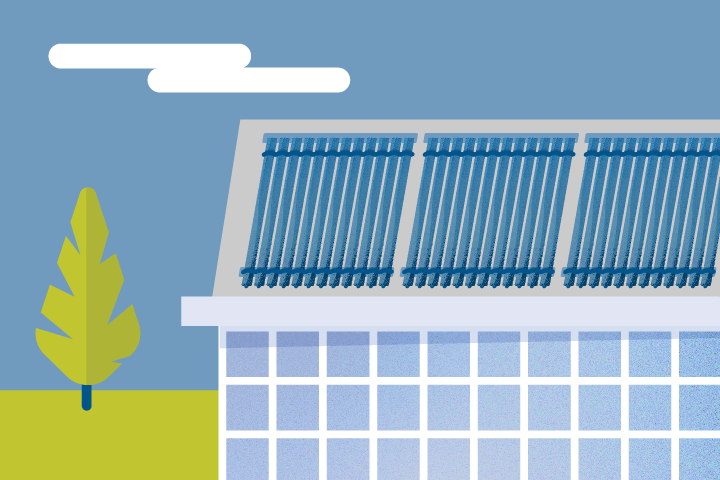
In addition to heating some of our terminal water with solar thermal heating, YVR plans to decarbonize the hot water systems in the International Terminal Building through the use of high efficient electric air source heat pumps. Once completed, these upgraded hot water systems will reduce YVR’s carbon emissions by almost 300 tonnes per year.

Expanding our charging network
Through partnerships with local companies like Moment Energy and BC Government support from the Integrated Marketplace Initiative, YVR is continuing to expand our EV charging network to meet the needs of our growing EV fleet as well as the needs of our commercial partners on Sea Island.